Bancame
A wallet that helps kids learn to manage their money
30 s for the summary7 min for the full case
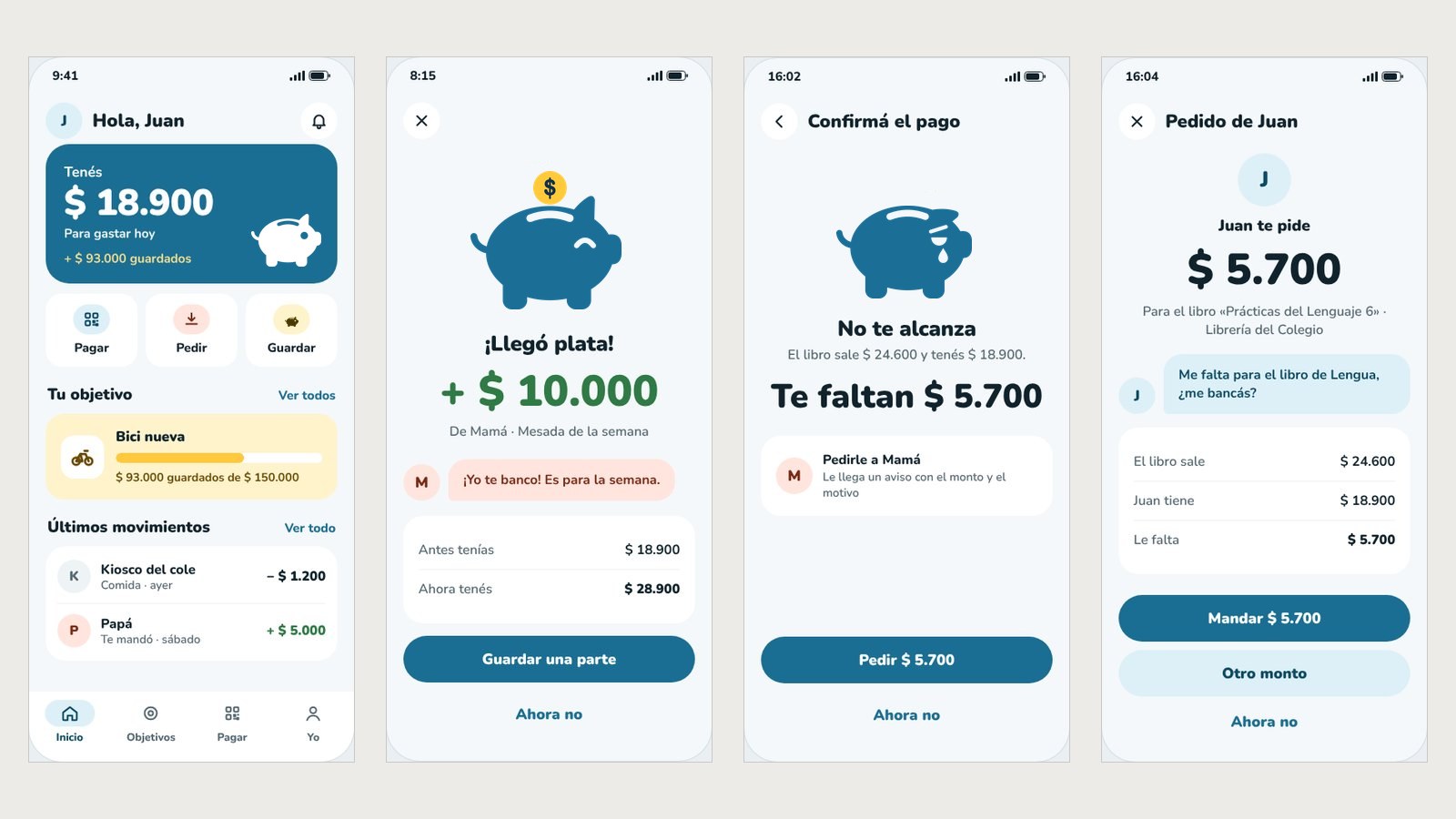
In 30 seconds
In 2017 no wallet accepted minors, and parents had no way to stay involved in their kids' spending. In a weekend hackathon we designed Bancame: kids manage their own money and parents "back them" ("bancar", in Argentine Spanish). We won. In 2026 I redesigned it as a product: how a 10-year-old understands money, how they ask for help when they don't have enough, and how the adult supports without watching over them. Since then, the market has moved in the same direction: today the big wallets open accounts for minors.
- 10–18
- years old: the wallet’s audience
- 3
- possible adult responses to each request
- 6
- flows redesigned in high fidelity
The problem (2017)
- Kids needed to pay and wanted independence. Less and less is paid in cash, and physical money is hard for a kid to manage and for their parents to follow. They also wanted to decide what to spend on and save up for something of their own.
- Parents wanted to support without controlling everything: know where the money goes and teach them to save.
- There was no tool for that. Banks wanted to bring people into banking at a younger age, but nobody had designed a product for a 10-year-old.
The hackathon
In one weekend we created the concept, the profiles and the pitch:
- Two profiles: Jorge, 47, who wants to give his son freedom without losing sight of his spending; and Juan, who at 10 wants to decide and at 16 wants to save for a trip and plan things with friends.
- Backed and backer: the kid and the adult link up with a code, and the adult decides how to back them.
- Individual and group goals ("la vaquita", the kitty), limits and levels that grow with age.
There was no time to test with parents or kids: the profiles came from the team's knowledge. That's the main thing to validate.
The redesign (2026)
I kept what worked from the pitch (the piggy bank, the blue and the idea of "backing") and turned it into a product a 10-year-old can use alone. I solved it with four decisions.
1. Money, easy to understand
A kid needs to know at a glance how much they can spend, without reading banking jargon.
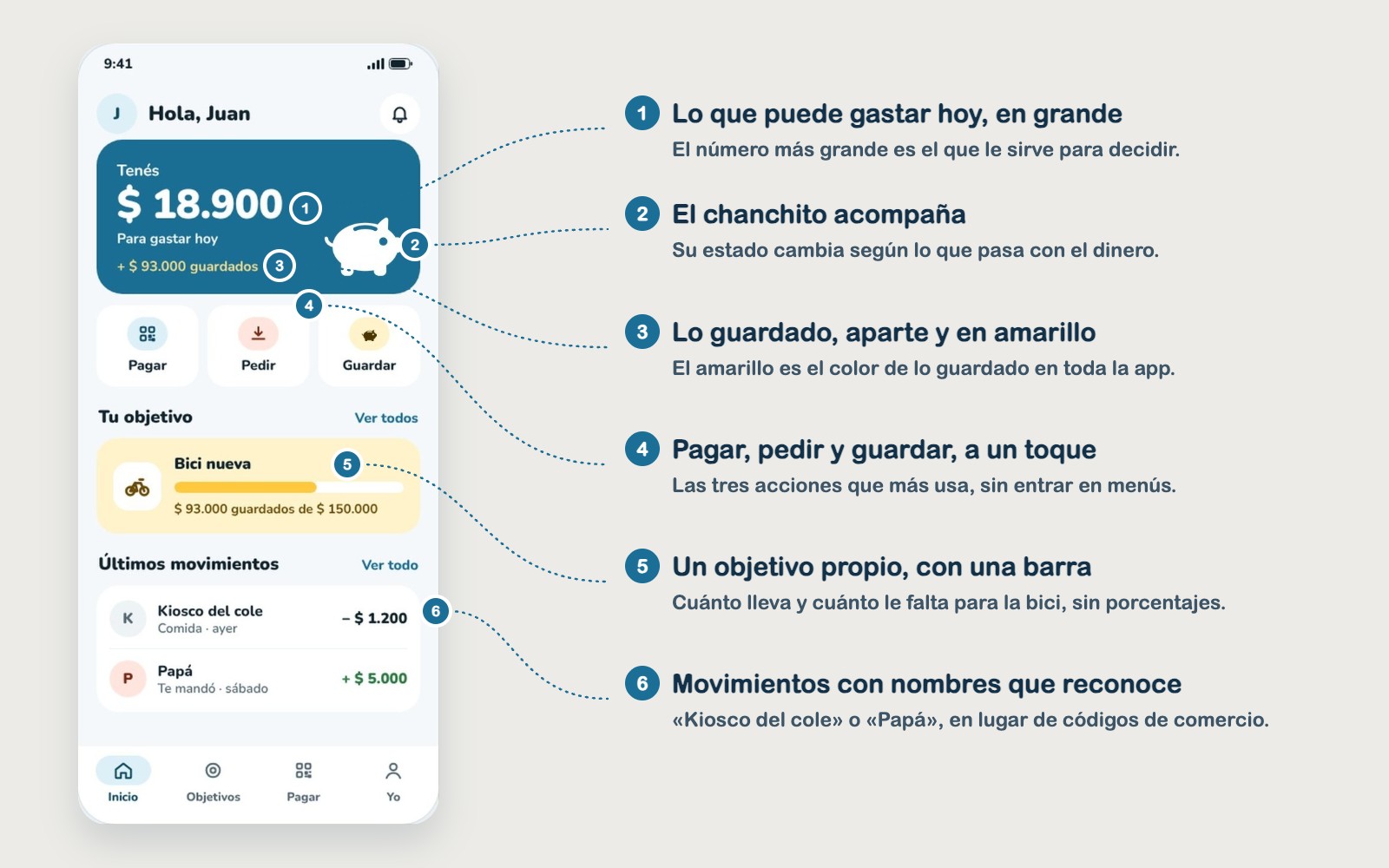
- The big number is what can be spent today. Saved money appears separately, in yellow, the colour for saved money throughout the app.
- Pay, ask and save, one tap away from the home screen.
- Before paying, the app shows how much you'll have left. That's the figure that helps a kid decide. Technical details, such as the bank account number, stay in the background.
- A single word, "save", across the whole app, instead of mixing "savings", "piggy bank" and "goal".
2. The adult validates instead of watching over
When there isn't enough money, the app doesn't show an error: it opens a conversation between the kid and the adult.
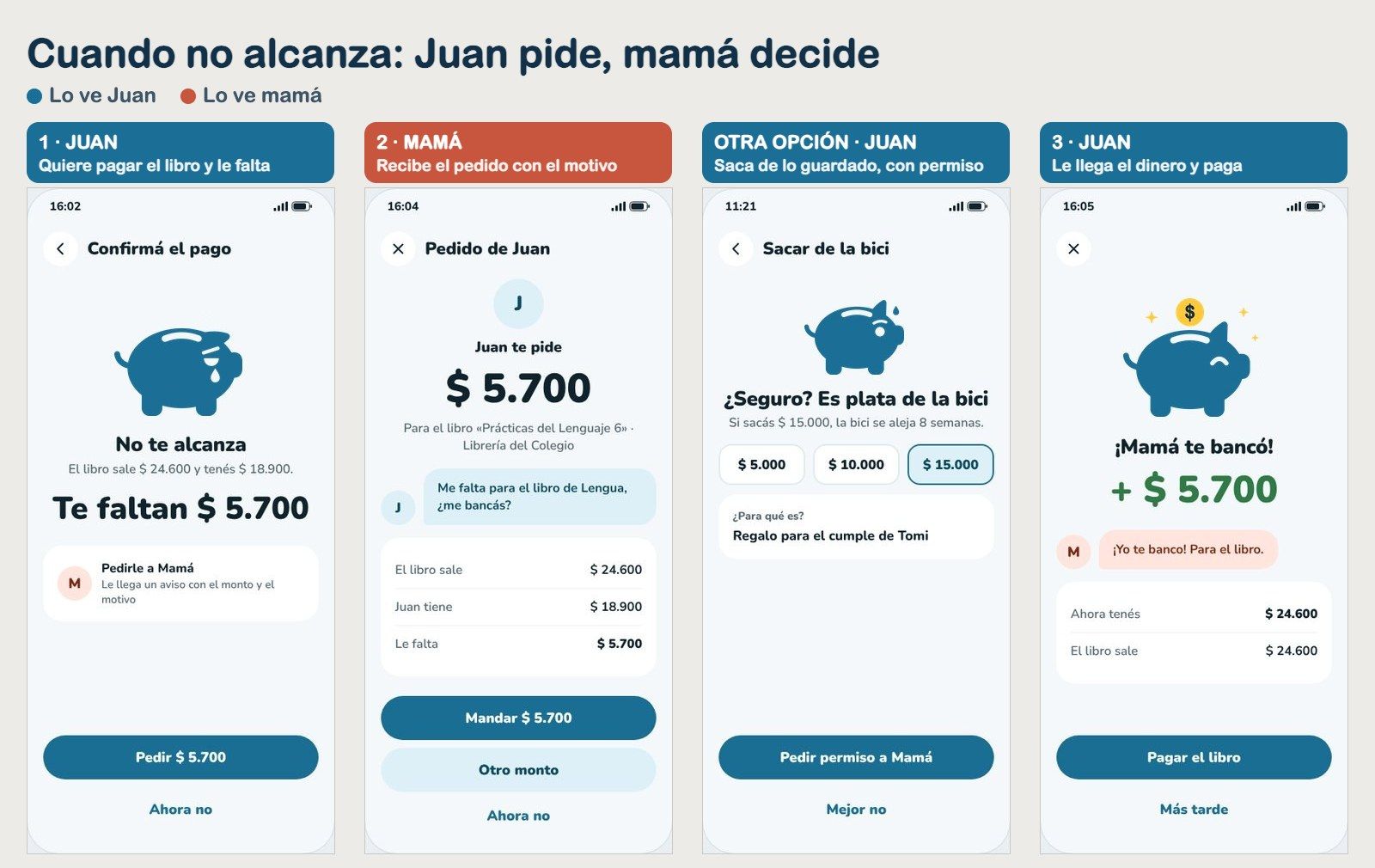
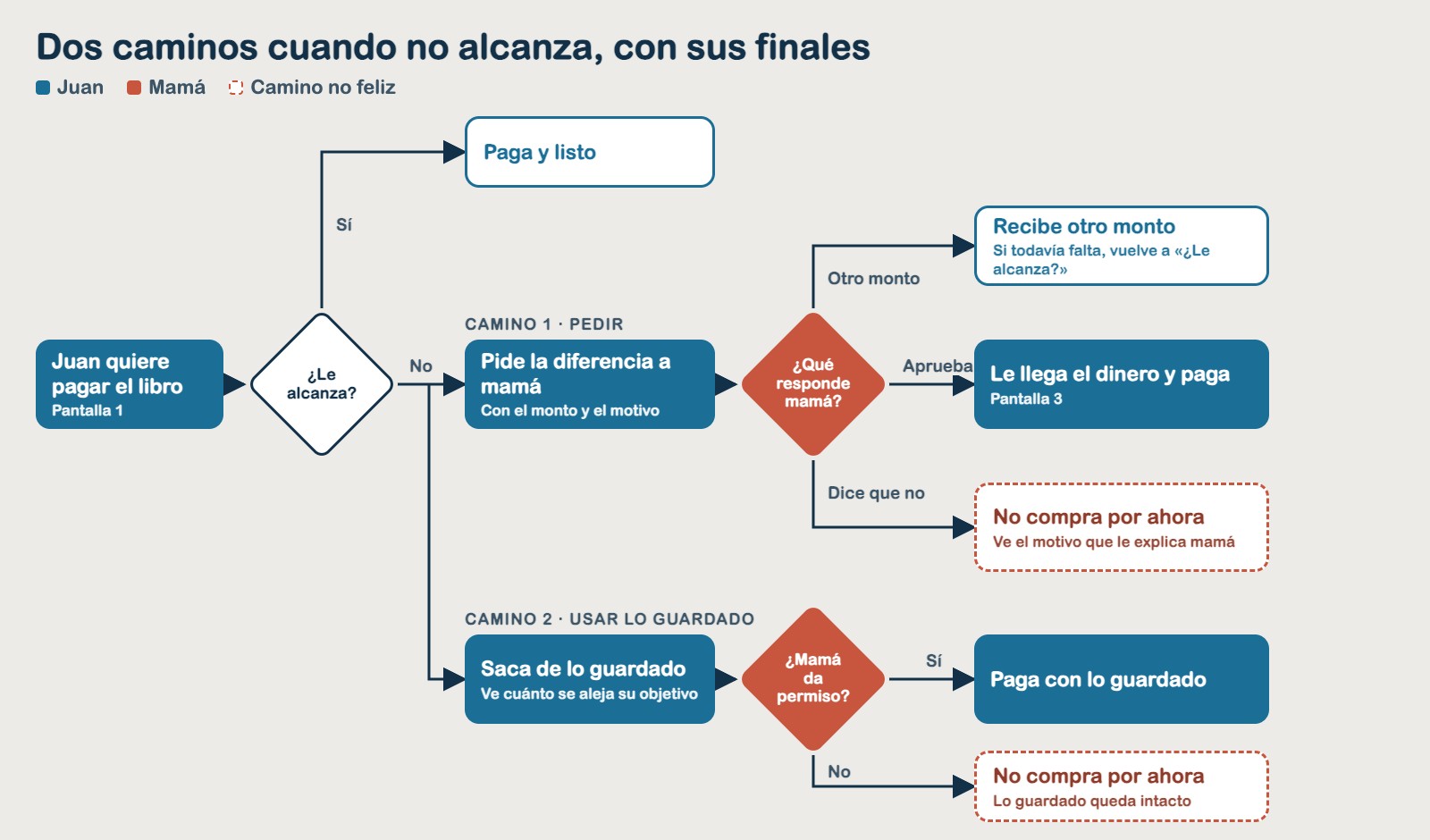
- When there isn't enough, the kid asks the adult directly. Instead of "Insufficient funds", the app shows how much is missing and asks for it in one tap, with the reason.
- The adult has 3 options for each request: approve it, send a different amount or explain why not.
- Taking out saved money needs permission. The rule is explained before the kid runs into it, and the cost is put in the kid's language: "the bike moves 8 weeks further away".
- When the money arrives, the payment picks up where it left off. The kid doesn't have to scan again.
- The adult sees spending by category, not purchase by purchase: control without surveillance.
3. An identity to match
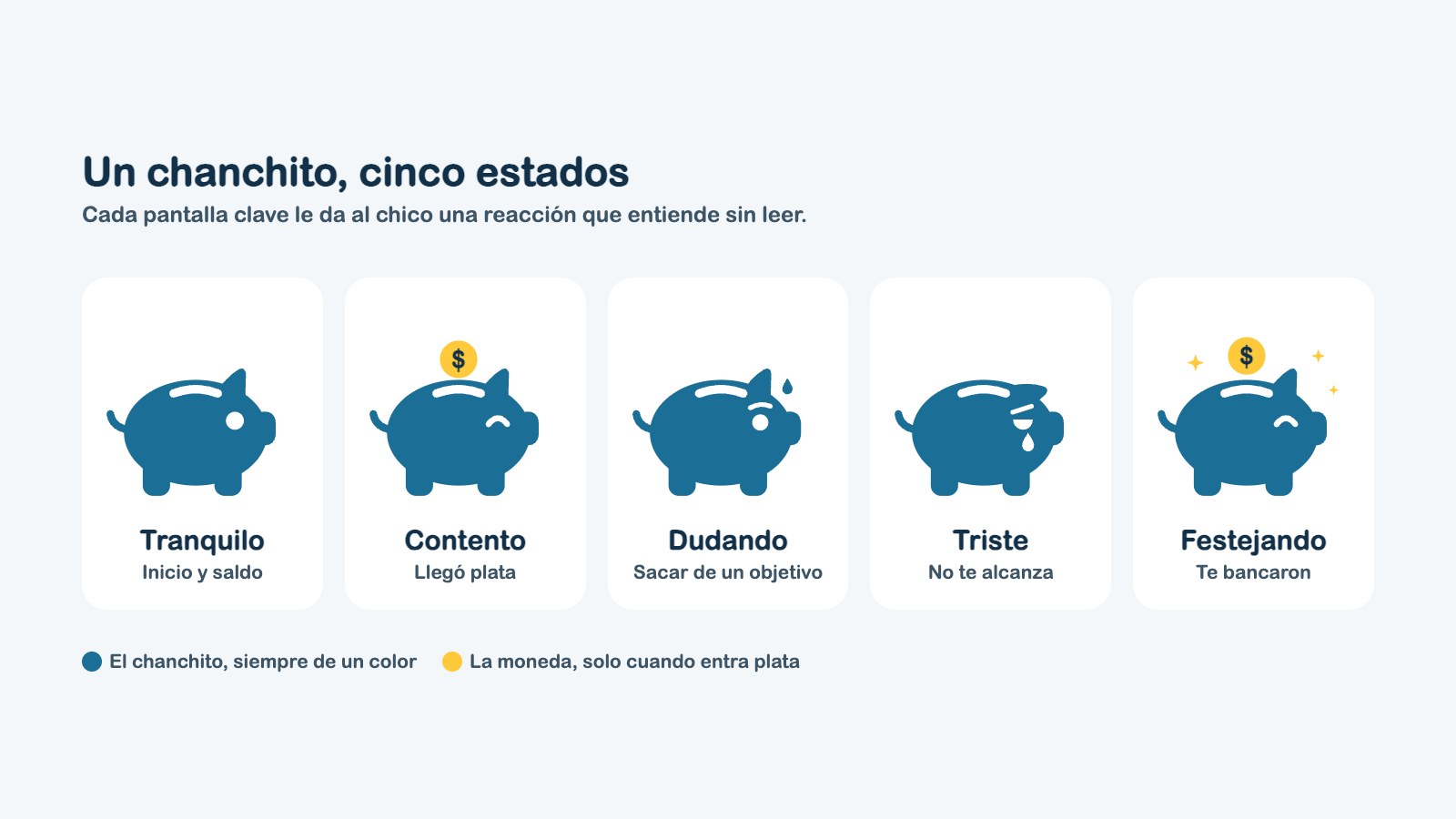
The piggy bank went from drawing to character: it reacts to what happens with the money.
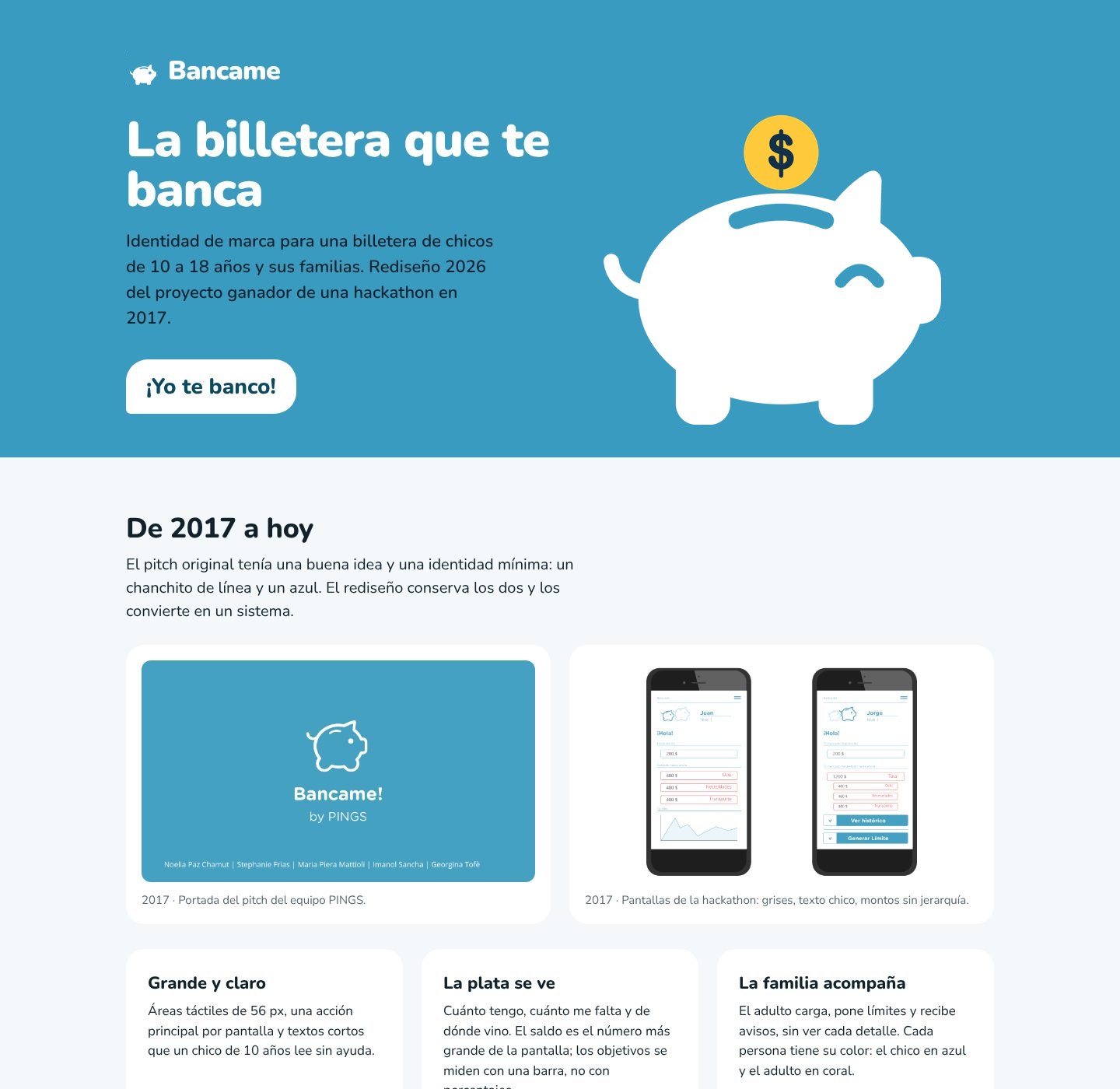
- It's also the logo. It combines parts of the original pitch (the tail, the ear and the snout) with the body, legs, eye and coin slot of the redesign.
- Five states, one for each moment: calm, happy, unsure, sad and celebrating. Only two colours, its own and the yellow of the coin, so it can be read at a glance.
- Colours with meaning: blue for actions, yellow for saved money and coral to identify the adult.
- Rounded type, big buttons and short copy for kids aged 10 to 13.
4. It grows with the kid
At 16, Juan gets a virtual card, transfers and the kitty with friends: the group goals idea from the pitch.
The market went the same way
In 2017 no wallet accepted minors. Mercado Pago opened accounts for teenagers aged 13 to 17 in 2021, and in 2025 lowered the age to 10. Ualá also offers accounts from 13.
It probably wasn't just a question of vision: opening accounts for minors depends on regulation and parental consent, and that path also opened up over the years. The need we saw in 2017 was real; the market solved it when it could.
Learnings
- The adult's permission is part of the product. Designing the request and the response delivers the kid's autonomy and the adult's peace of mind at the same time.
- What I'd do differently: I'd test with kids and parents from the start, even if it were just a few conversations. At the hackathon there was no time, and the profiles stayed as hypotheses.